An independent knowledge base about Curve Finance
Curve Finance explained, in plain language
Curve Finance is a decentralised exchange built for assets that are supposed to trade close to each other — stablecoins like USDC and USDT, or liquid staking tokens like stETH and ETH. Its stableswap formula concentrates liquidity around the peg, so large trades settle with far less slippage than on a general-purpose AMM. This guide walks through every part of the protocol: pools, fees, crvUSD, CRV emissions and the veCRV vote-escrow system.
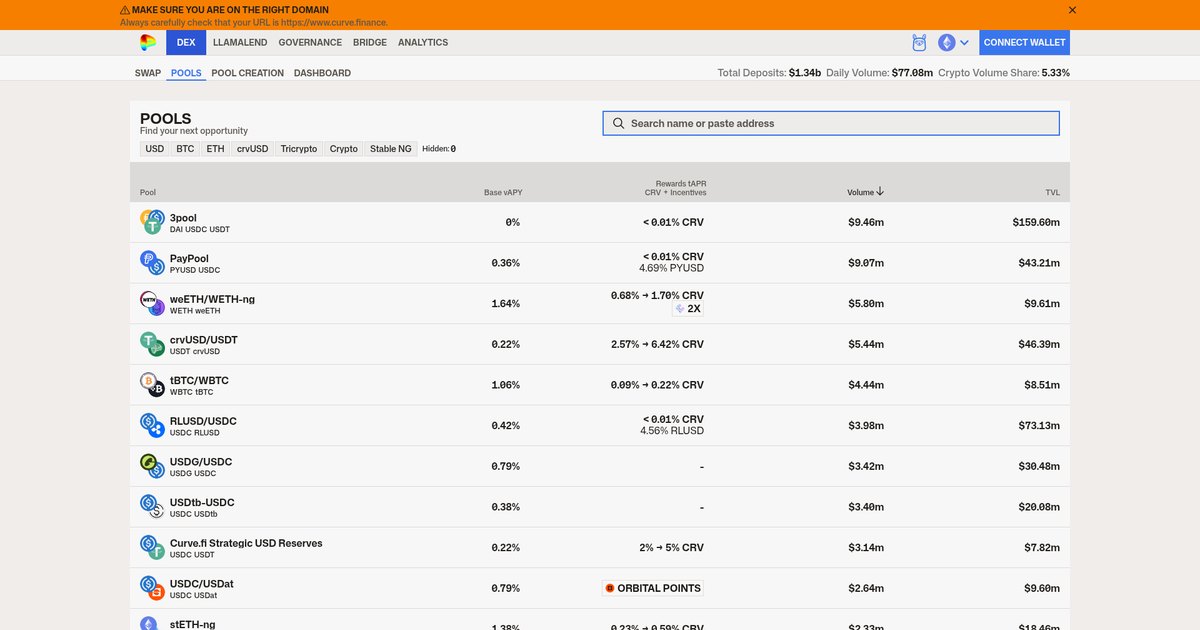
What Curve is for
Curve launched in 2020 as a specialised automated market maker (AMM). Instead of trying to price every possible token pair, it optimises for pairs whose fair exchange rate is roughly 1:1. That single design decision is why it became the default venue for stablecoin swaps and for liquid staking token liquidity.
For a trader, that means tighter execution on size. For a liquidity provider, it means fee income plus incentives with much less exposure to divergence loss than in a volatile pair — although the risk never disappears completely.
The main building blocks
Pools hold the assets and execute swaps. Gauges measure how much liquidity each pool attracts and route CRV emissions to it. veCRV — CRV locked for up to four years — decides how those emissions are distributed and governs the protocol. crvUSD is the protocol's own overcollateralised stablecoin with a soft-liquidation mechanism called LLAMMA.
Everything is connected: locking CRV boosts your yield, directs emissions, and earns a share of protocol fees. Understanding one part without the others gives a misleading picture, which is why each guide on this site links to the next.
How to use this site
Start with the introduction to the protocol, then move on to pools and swaps to see how a trade is actually priced. crvUSD and lending covers borrowing, and CRV tokenomics covers the incentive layer.
The article section goes deeper: the maths behind the AMM, how to evaluate a pool, how farming rewards are calculated, how governance really works, and which risks matter most.
Guides
What is Curve Finance?
A clear introduction to Curve Finance: the stableswap AMM, who uses it, what problem it solves and how it differs from Uniswap.
Curve pools and swaps
How Curve liquidity pools work: pool types, swap fees, slippage, LP tokens, depositing and withdrawing, and how to read pool balance.
crvUSD and borrowing on Curve
How crvUSD works: overcollateralised minting, the LLAMMA soft-liquidation engine, borrow rates, the peg keeper and Curve lending markets.
CRV tokenomics and veCRV
CRV supply and emissions, how vote-escrowed veCRV works, boost calculation, gauge weight voting and the vote incentive market.
How to use Curve Finance step by step
Step-by-step guide on how to use Curve Finance: connect a wallet, swap stablecoins, add liquidity, stake LP tokens in a gauge, claim CRV and lock veCRV safely.
Latest updates
Real Curve Finance interface screenshots on every page
Illustrations were replaced with screenshots of the live Curve app — the pools list, the swap screen, the gauge dashboard, DAO proposals, veCRV locking and crvUSD savings — and each one now carries descriptive alt text and social preview images.
New step-by-step guide: how to use Curve Finance
A full walkthrough was added: connecting a wallet, swapping stablecoins, adding liquidity, staking LP tokens in a gauge, claiming CRV and locking veCRV, plus the mistakes that cost beginners the most.
FAQ blocks built around real search queries
Fourteen questions per language now answer the things people actually search for: how StableSwap works, what vote-escrow gives you, how LLAMMA soft-liquidation behaves, and whether Curve is safe to use.
Articles
How the Curve AMM actually works
A step-by-step explanation of the Curve stableswap invariant, the amplification parameter A, price impact and how cryptoswap extends it to volatile assets.
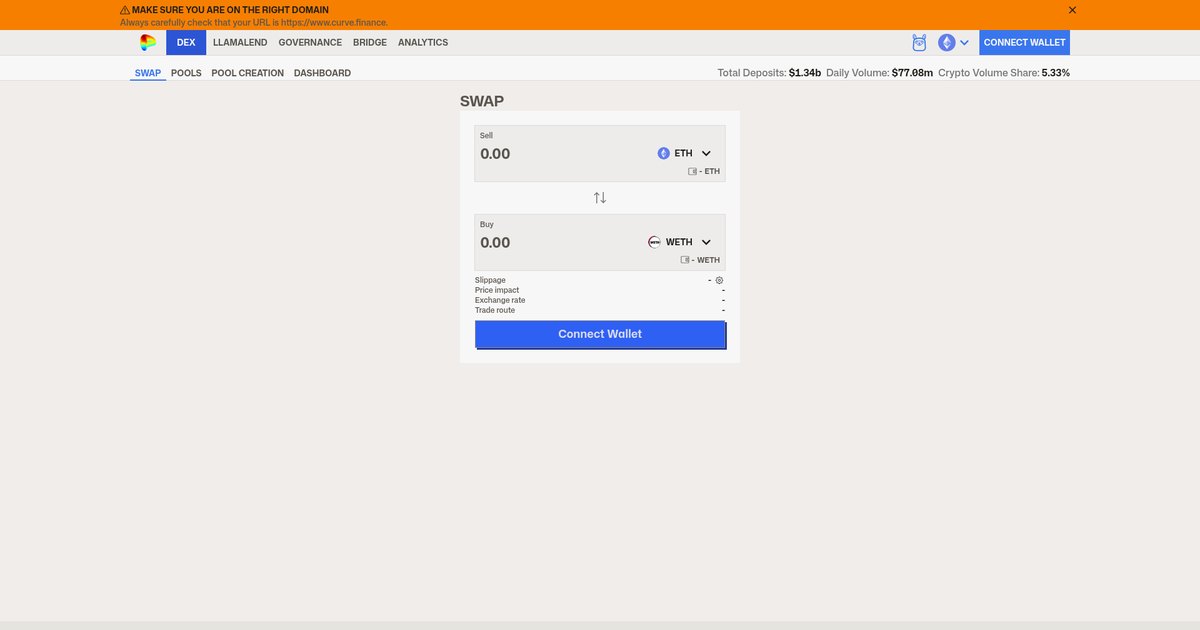
How to evaluate a stablecoin liquidity pool
A practical checklist for judging a Curve stablecoin pool: asset quality, pool balance, amplification, volume-to-TVL ratio and reward sustainability.
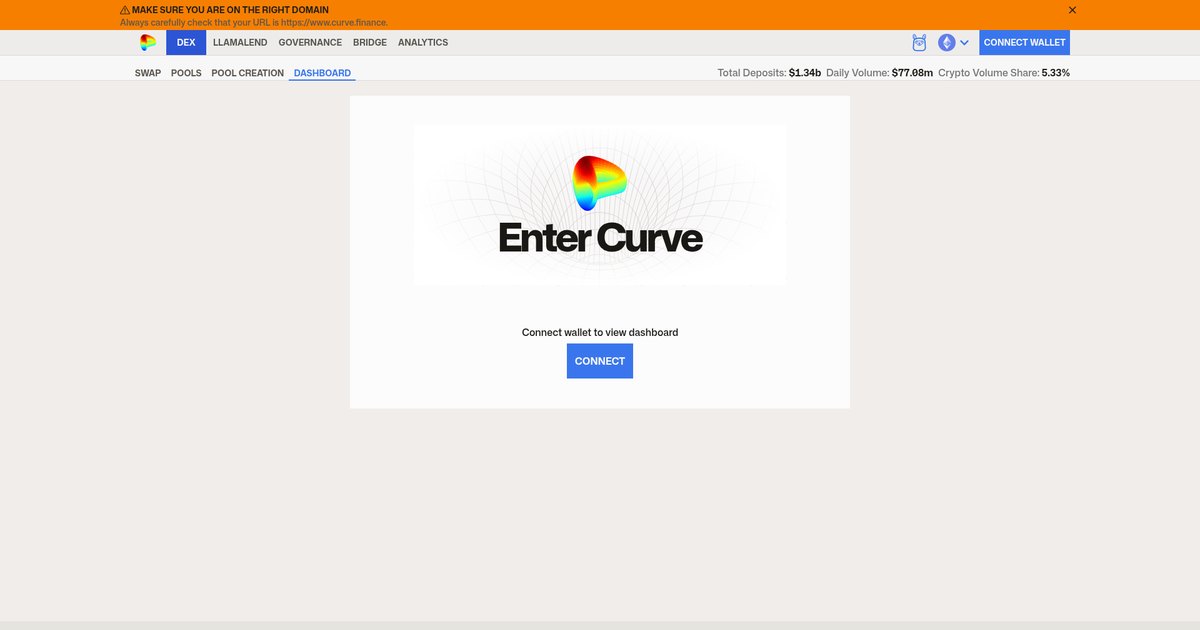
Yield farming on Curve, step by step
How CRV rewards are earned and claimed: gauge staking, boost calculation, aggregators like Convex, compounding, gas costs and calculating a realistic net yield.
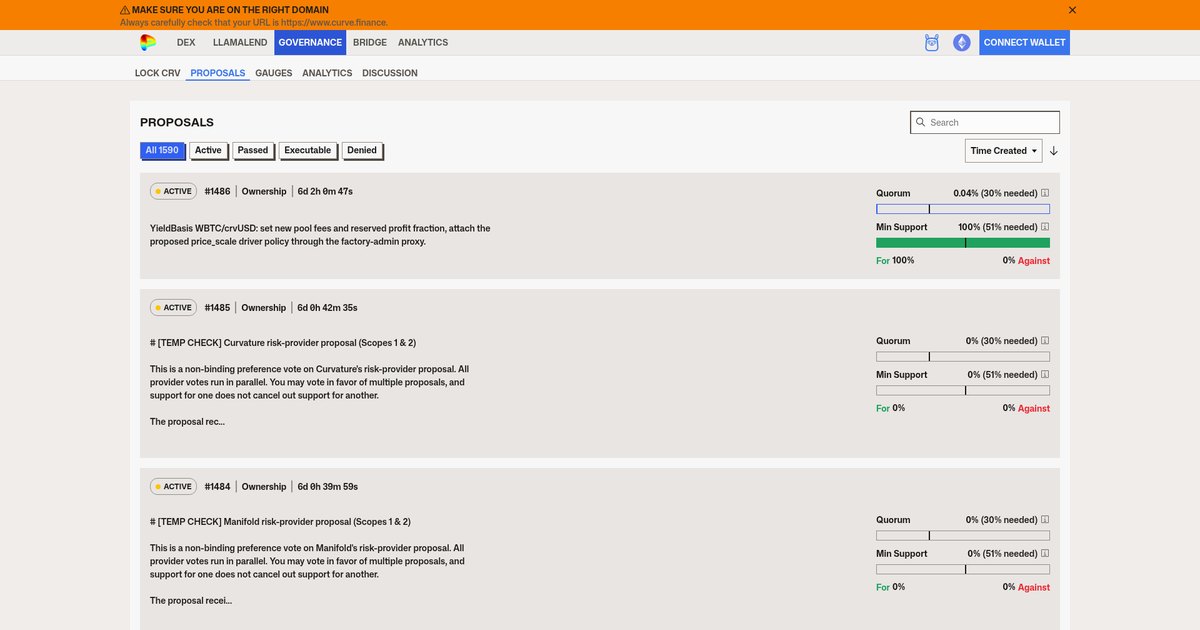
veCRV and how Curve is governed
How the Curve DAO works: veCRV voting weight, proposal thresholds, weekly gauge weight votes, the vote incentive market and its criticisms.
Curve security and the risks that matter
An honest overview of Curve risks: smart contract and compiler bugs, depegs, oracle manipulation, governance capture, phishing, and practical mitigations.
Popular Curve Finance searches
The questions people most often ask about Curve Finance, each linked to the guide or article that answers it in full.
Curve Finance basics
Pools, swaps and stableswap
CRV, veCRV and crvUSD
Frequently asked questions
Is Curve Finance safe to use?
Curve's core contracts have been live for years and audited multiple times, but DeFi always carries smart contract, oracle, depeg and governance risk. The 2023 Vyper compiler incident showed that even mature code can be affected by dependencies. Never allocate more than you can afford to lose.
Do I need CRV to use Curve?
No. Anyone can swap or provide liquidity without holding CRV. Locking CRV as veCRV is optional and mainly matters if you want boosted rewards, a share of trading fees and voting power.
Which chains does Curve run on?
Curve deployments exist on Ethereum mainnet and a number of L2s and sidechains, including Arbitrum, Optimism, Base, Polygon and others. Liquidity depth differs a lot between deployments, so check the pool before trading size.
Curve Finance FAQ: answers to the most searched questions
Direct answers to the Curve Finance queries people search most, each linked to the guide that covers it in depth.
What is Curve Finance and how does it work?
Curve Finance is a decentralised exchange (Curve DEX) built for assets that should trade near a fixed ratio, such as stablecoins and liquid staking tokens. It uses the StableSwap invariant to concentrate liquidity around the peg, so a curve swap costs far less slippage than on a constant-product AMM.
What is Curve Finance →How do I use Curve Finance to swap stablecoins?
Connect a wallet on the official Curve app, pick a pool that holds both assets, and confirm the trade; the router can hop through several curve liquidity pools to find the best rate. Fees are typically a few basis points and are paid to liquidity providers and veCRV holders.
How to use Curve Finance →What is the CRV token used for and what drives CRV price?
CRV is the Curve DAO token: it rewards liquidity providers through gauges and can be locked as veCRV for governance power and fee share. CRV price mainly reflects emissions, lock ratio and the demand for gauge votes in the Curve wars.
CRV tokenomics →What is crvUSD and how does Curve lending work?
crvUSD is Curve's over-collateralised stablecoin minted against collateral like ETH or LSTs. Curve lending uses LLAMMA, which liquidates gradually across price bands instead of in one hard liquidation event.
crvUSD and lending →How does the Curve AMM and the StableSwap invariant work?
The StableSwap invariant blends a constant-sum and a constant-product curve, staying almost flat near the peg and bending outward when a pool becomes imbalanced. The amplification coefficient A controls how flat that region is.
How the Curve AMM works →Why does Curve have such low slippage on large stablecoin trades?
Because liquidity is mathematically concentrated where the assets trade one-to-one, large size barely moves the price until reserves become imbalanced. That is why Curve routes most of DeFi's stablecoin swap volume.
Read the AMM breakdown →How do Curve liquidity pools and LP tokens work?
Depositing into a curve liquidity pool mints an LP token representing your share of the reserves plus accrued trading fees. Staking that LP token in the pool's gauge adds CRV emissions on top.
Stablecoin liquidity pools →Can I deposit only one stablecoin into a Curve pool?
Yes — single-sided deposits are allowed, and the pool applies a small bonus or penalty depending on whether your deposit balances or unbalances the reserves. Withdrawals work the same way in reverse.
Pool deposit mechanics →What is Curve yield farming and what APY can you expect?
Curve yield farming means supplying a pool, staking the LP token in a gauge and collecting trading fees plus CRV emissions and any external incentives. APY is variable and depends on pool volume, gauge weight and your boost.
Yield farming on Curve →What is Convex Finance and why do people use CVX?
Convex Finance lets liquidity providers get a boosted CRV yield without locking CRV themselves, by pooling veCRV voting power. In exchange, CVX holders direct that voting power, which is a central mechanic of the Curve wars.
Boosts and Convex →What is veCRV and how does Curve DAO governance work?
Locking CRV for up to four years mints non-transferable veCRV, which grants voting power, up to a 2.5x boost on farming rewards and a share of protocol fees. veCRV holders vote weekly on gauge weights that decide where CRV emissions go.
veCRV and governance →What are the Curve wars?
The Curve wars are the ongoing competition between protocols to accumulate veCRV voting power and steer CRV emissions to their own pools. Vote markets and bribe platforms let projects rent that influence per epoch.
Curve wars explained →Is Curve Finance safe to use?
Curve's core contracts are long-lived, heavily audited and hold billions in liquidity, but no DeFi protocol is risk-free — the 2023 Vyper reentrancy incident showed that compiler-level bugs can hit even mature code. Use official links, prefer battle-tested pools and size positions accordingly.
Security and risks →What are depeg and impermanent loss risks on Curve?
If one asset in a pool loses its peg, the pool absorbs it and LPs end up holding mostly the weaker asset. That path-dependent loss, plus smart-contract and oracle risk, is the main downside of stablecoin liquidity providing.
Risk checklist →